What counts as an overstay
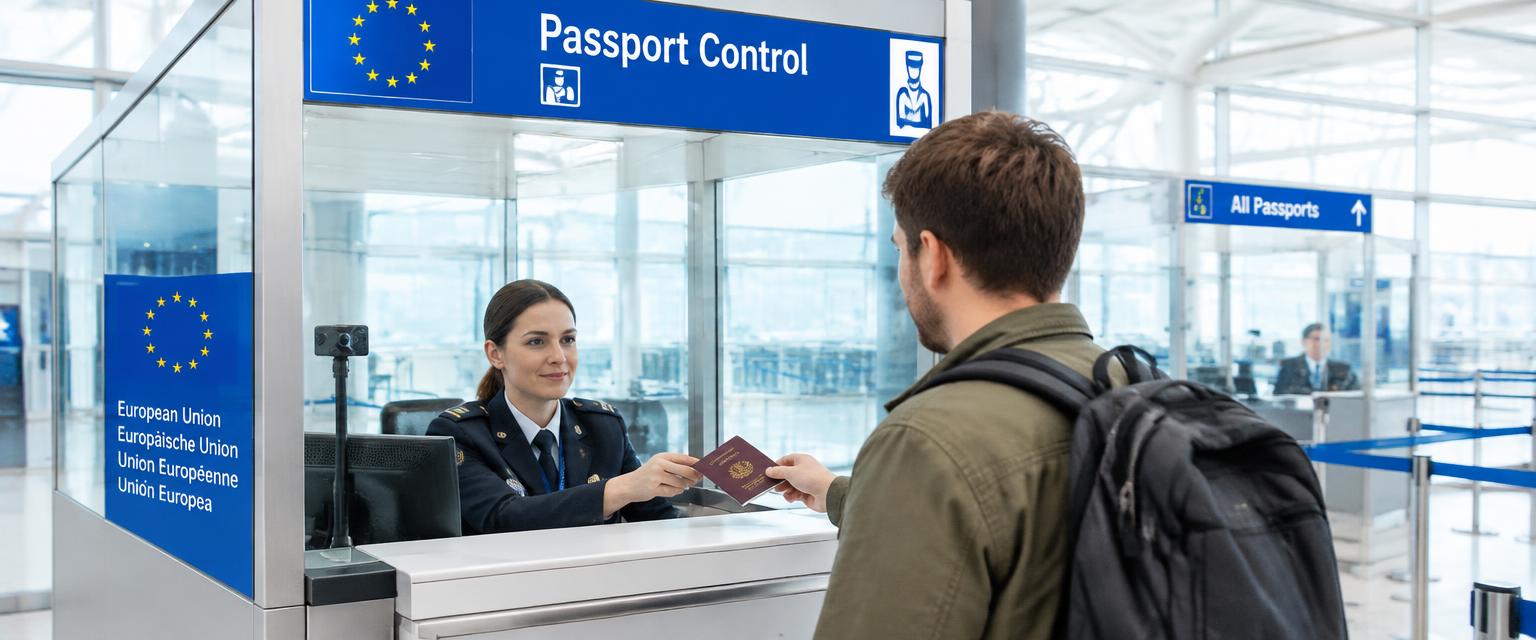
Any day on which your rolling 180-day window contains more than 90 days of presence. Under the Entry/Exit System (EES), every crossing is logged electronically, so overstays are detected automatically at exit.
Possible penalties
- Fines — set by each country. Ranges reported include roughly €500–€10,000 in Spain, up to €3,000 in France and €600–€1,200 in Greece, with Germany able to impose fines or criminal proceedings.
- Detention and removal — authorities can issue a return decision and deport you at your own expense.
- Entry bans — commonly 1 to 5 years, and longer where there is a security threat. Bans are recorded in the Schengen Information System and apply across all member states.
- Future travel — an overstay record can lead to ETIAS refusal, visa refusals and closer questioning at borders worldwide.
Mitigating factors
Documented emergencies — flight cancellations, hospitalisation, natural disasters — can be taken into account. Contact local immigration authorities before your permitted stay ends and keep evidence.
If you've already overstayed
- Leave as soon as possible; prolonging it makes things worse.
- Carry proof of your onward travel and any reasons for the delay.
- Be honest with border officers; consider seeking advice from an immigration lawyer.
Prevent it: check your exact position with the 90/180 calculator.